How Long Does It Take to Get a Suit Tailored in Chiang Mai? A Tourist’s Timeline
For travellers planning a tailored wardrobe during their holiday, knowing How Long Does a Suit Take in Chiang Mai can make the entire experience easier to organise. Many visitors discover Custom Suits Chiang Mai while planning their trip and want to understand how much time they should realistically leave for consultation, measurements, fittings and final collection. The good news is that tailoring can often fit comfortably into a well-planned Chiang Mai itinerary, provided the process is started early enough.
How Long Does a Suit Take in Chiang Mai is a question many tourists ask .A custom suit is not normally created in a single appointment. The tailor needs time to understand the customer’s requirements, take measurements, prepare the garment, conduct fittings and make any necessary refinements. The exact schedule depends on the design, fabric, construction, fitting requirements and the customer’s travel dates.
When someone asks – How Long Does a Suit Take in Chiang Mai – “It depends” is the right answer. For tourists, timing matters even more because the suit needs to be completed before the flight home. Understanding the typical sequence can help visitors avoid rushing decisions and give the tailor enough time to produce a properly finished garment.
How Long Does a Suit Take in Chiang Mai?
There is no single timeline that applies to every custom suit. A straightforward suit with readily available fabric and a clear design may move through the process relatively quickly, while a more complex garment or one requiring additional adjustments can take longer.
For many travellers, the most practical approach is to allow several days rather than trying to complete everything immediately before departure. The exact timeline should be discussed with the tailor at the beginning, particularly if the suit is required for a wedding, business meeting or formal event.
When customers ask How Long Does a Suit Take in Chiang Mai, they should think in terms of a complete process rather than simply the number of days required for sewing. There is not a single answer to “How Long Does a Suit Take in Chiang Mai” cause Consultation, measurement, construction and fitting all contribute to the final schedule.
Why Tourists Should Plan Before Their Appointment before they ask – How Long Does a Suit Take in Chiang Mai
The tailoring timeline becomes easier when the customer knows their travel schedule in advance. Before visiting the tailor, make a note of your arrival date, departure date and any event for which the suit is required.
If you are attending a wedding on a particular day, tell the tailor immediately. The same applies if the suit is needed for a business presentation or formal dinner.
This information allows the tailor to determine whether the requested garment and schedule are realistic. It also reduces the chance of leaving important fitting or adjustment work until the last moment.
Day 1: The Initial Consultation
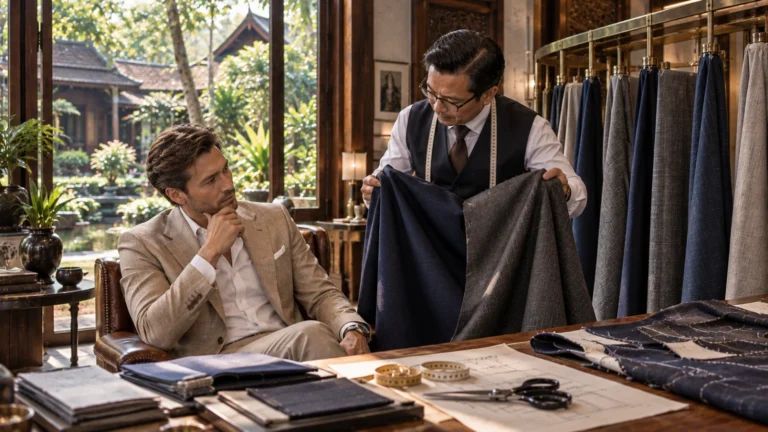
The first appointment usually begins with a conversation about the garment. Tourists often ask – How Long Does a Suit Take in Chiang Mai ?? . WE say it takes time to get the best suit for you.
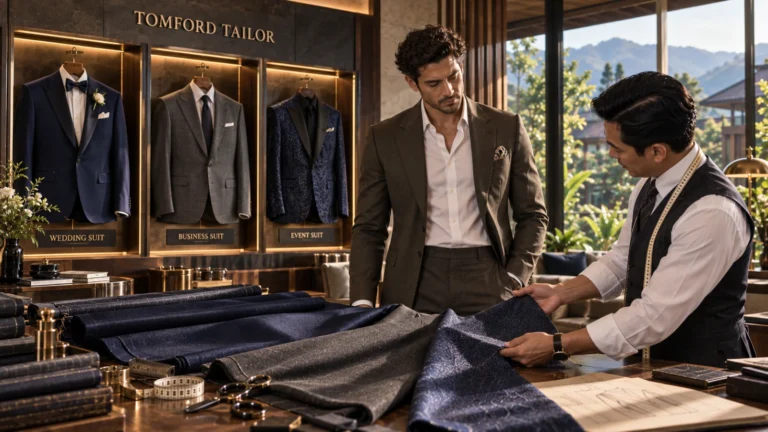
The tailor may ask where the suit will be worn, how frequently it will be used and what type of fit the customer prefers. This is also the time to discuss colour, fabric, lapel style, trousers and other design details.
Visitors do not need to arrive with every decision already made. A good consultation should help them understand the available options and choose something appropriate for their requirements.
This initial conversation is particularly important when considering How Long Does a Suit Take in Chiang Mai, because design decisions made at the beginning can influence later stages of the process.
Day 1: Fabric Selection
Fabric selection often takes place during the first consultation.
The right fabric depends on climate, occasion, comfort and how frequently the suit will be worn. Lightweight wool can provide a versatile combination of structure and breathability, while linen can work particularly well for relaxed warm-weather events.
Customers may also consider premium wool, Italian fabrics, cotton or performance materials depending on their requirements.
Visitors should not feel pressured to select the most expensive fabric. The objective is to choose a cloth that suits the garment’s purpose and the customer’s lifestyle.
Day 1: Professional Measurements
Once the design direction and fabric have been established, the tailor takes the customer’s measurements.
Measurements can include the chest, waist, shoulders, sleeve length, jacket length, hips and trouser dimensions. The tailor may also consider posture and body proportions.
This stage provides the foundation for the suit.
A standard size can only provide general proportions, whereas custom measurements allow the garment to be developed around the individual customer.
Accurate measurements also help make the subsequent fitting process more productive.
Day 1: Discussing the Fit rather then thinking – How Long Does a Suit Take in Chiang Mai
Measurement alone does not determine how a suit should fit.
The customer should explain whether they prefer a close modern silhouette, a classic fit or something more relaxed. The tailor can then consider these preferences while developing the garment.
This is also the right time to mention lifestyle requirements. A frequent traveller may need more movement and practical fabric performance, while someone purchasing a formal wedding suit may prioritise structure and appearance.
The clearer the conversation at this stage, the easier it becomes to work toward the desired result.
Day 2–3: Knowing the Pattern and Construction rather then thinking – How Long Does a Suit Take in Chiang Mai
After the initial appointment, the measurements and design decisions are translated into the developing garment.
The pattern provides the structural framework, while the selected fabric is prepared and cut according to the required pieces. Construction then begins, gradually turning the original concept into a wearable suit.
The amount of time required can vary depending on the garment and tailoring process.
A relatively straightforward suit may move quickly through construction, while more detailed designs can require additional attention.
This is another reason why the answer to How Long Does a Suit Take in Chiang Mai cannot be reduced to one universal number.
Why Construction Quality Matters more then knowing – How Long Does a Suit Take in Chiang Mai
Speed should not be the only consideration when arranging tailoring during a holiday.
A suit needs to be properly constructed and finished, not simply completed as quickly as possible. Stitching, lining, buttons, pockets and internal structure all contribute to the final garment.
Customers should therefore ask about the complete process rather than focusing exclusively on the fastest possible delivery.
A carefully managed timeline can provide enough room for construction and fitting without making the customer feel rushed.
Day 2–4: The First Fitting
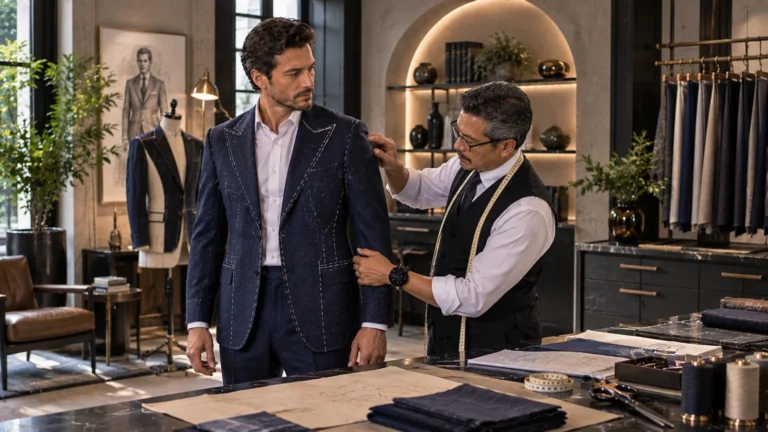
Once the developing suit is ready for fitting, the customer can try it on for the first time.
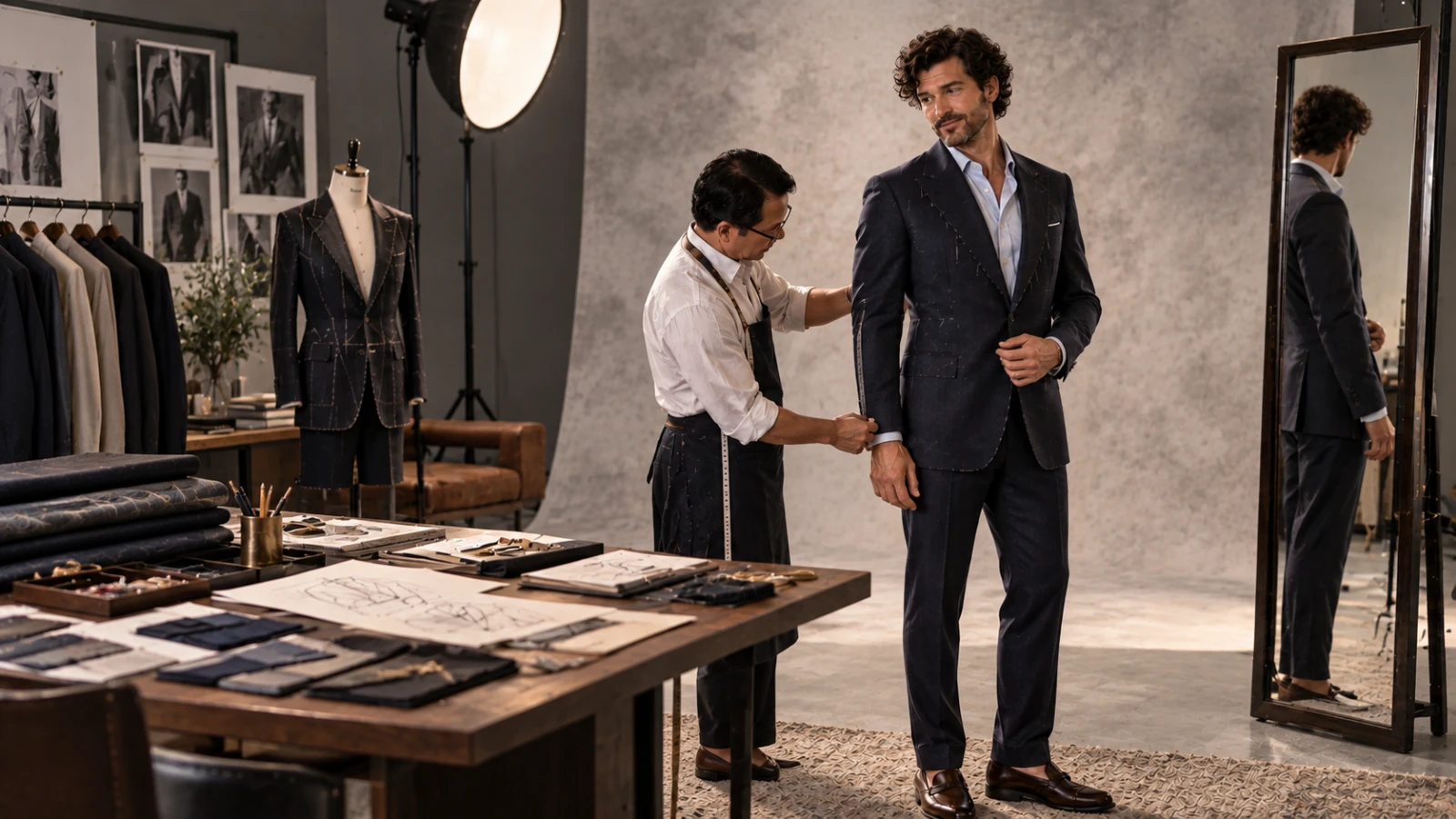
This is one of the most important stages because the tailor can see how the garment behaves on the actual wearer. The shoulders, chest, waist, sleeves, jacket length and trousers can all be assessed.
The customer should also move naturally during the fitting. Walking, sitting and raising the arms can reveal areas that may require adjustment.
The first fitting is therefore more than a quick check of whether the suit fits. It is an opportunity to refine the relationship between the garment and the wearer.
What Happens During the First Fitting of How Long Does a Suit Take in Chiang Mai?
The tailor may identify several areas that need refinement.
The sleeve could be slightly too long. The waist might require adjustment. The trousers may need a different length or the jacket balance could be refined.
These adjustments are a normal part of custom tailoring.
A human body is not perfectly symmetrical, and the way clothing sits can only be fully understood once the developing garment is worn.
For tourists wondering How Long Does a Suit Take in Chiang Mai, the fitting stage is one reason it is wise to leave enough time before departure rather than planning collection immediately after the first appointment.
Day 3–5: Adjustments and Refinement
Following the first fitting, the tailor makes the required adjustments.
The exact amount of work depends on what was identified during the fitting. Some garments may need only minor refinements, while others may require more careful correction.
The objective is to improve the overall balance and comfort of the suit.
A good tailoring process allows these changes to happen before final collection rather than treating the first fitting as the end of the process.
Day 4–6: Final Fitting that answers – How Long Does a Suit Take in Chiang Mai?
The final fitting gives the customer an opportunity to assess the completed or nearly completed suit.
At this stage, the shoulders should sit naturally, the jacket should create a balanced silhouette and the sleeves should work well with the shirt cuffs. The trousers should also complement the jacket in terms of length and proportion.
Comfort matters just as much as appearance.
The customer should be able to sit, walk and move naturally without unnecessary restriction.
If a small adjustment is still required, it is better to identify it during the final fitting than after returning home.
Why the Final Fitting Should Not Be Skipped to know – How Long Does a Suit Take in Chiang Mai more faster.
Tourists sometimes focus heavily on collection deadlines and may be tempted to reduce the number of fitting stages.
However, the final fitting can be valuable because it confirms that the finished garment works as intended.
A suit may look excellent on a hanger but behave differently when worn.
The final fitting allows the customer and tailor to assess the garment together and address any remaining concerns.
This is especially important for expensive fabrics or suits being prepared for significant events.
What Can Make the Timeline Longer?
Several factors can affect how long a suit takes.
Complex designs can require more work than straightforward classic suits. Certain fabrics may require more careful handling. Additional fittings can also extend the schedule.
If the customer changes major design details after construction has begun, additional time may be necessary.
Busy periods can also affect scheduling, particularly when many customers are ordering garments for weddings, holidays or major events.
For this reason, visitors should communicate their departure date as early as possible.
What Can Make the Timeline Faster?
A clear design can help the process move smoothly.
Customers who know the general purpose of the suit and communicate their travel schedule clearly make it easier for the tailor to organise the work.
Choosing an available fabric can also simplify the process.
However, faster should not automatically mean better. A realistic schedule should leave enough time for construction and fitting rather than removing important stages simply to meet an aggressive deadline.
Does the Fabric Affect the Timeline?
Fabric can influence the tailoring schedule, although the effect depends on the specific material and availability.
If the desired fabric is already available, the process can generally proceed without waiting for additional sourcing.
Special-order or particularly unusual fabrics may require additional time.
Customers who have a fixed departure date should therefore mention their preferred fabric early in the consultation.
This allows the tailor to explain whether the material is readily available and whether it is appropriate for the required schedule.
Does the Suit Style Affect the Timeline?
A classic two-piece suit is generally straightforward compared with a more elaborate design involving unusual construction or additional details.
The number of components, styling features and finishing requirements can influence the amount of work involved.
This does not mean customers should avoid distinctive designs. It simply means that a more detailed garment may require a little more planning.
If you have a specific design in mind, show the tailor a reference image during the first consultation so the required work can be assessed.
How Wedding Orders Should Be Planned
Wedding customers should be particularly careful about timing.
A wedding date is fixed, and the suit needs to be ready well before the event so there is enough time for final checks.
Visitors should ideally discuss the wedding date during their first contact with the tailor.
Fabric, colour, style and fitting requirements can then be planned around the event.
Wedding Suits may also require additional consideration because photographs, movement and long hours of wear make fit and comfort particularly important.
Planning a Business Suit
Business travellers often have tighter schedules than holidaymakers.
If the suit is required for a meeting or conference, provide the exact date and time of the event during the first consultation.
A versatile navy or charcoal suit can usually be easier to plan than a highly specialised design.
Business Suits can also be designed with frequent travel in mind, using fabrics and construction details that support practical use.
The key is to communicate the deadline before measurements are taken rather than after the garment has entered construction.
What Tourists Should Avoid
One of the biggest mistakes is waiting until the final day of the trip before beginning the tailoring process.
Even if a tailor can accommodate a fast order, this approach leaves little room for unexpected adjustments.
Another common mistake is changing the design repeatedly after construction has started. Major changes can affect both time and cost.
Customers should also avoid choosing fabric solely because it looks impressive under showroom lighting. Consider how the cloth will feel in the climate where the suit will actually be worn.
How to Build Tailoring Into Your Chiang Mai Itinerary
Tailoring does not need to consume an entire holiday.
A practical approach is to arrange the first consultation early in the trip, then continue sightseeing and other activities while the garment is being prepared.
The fitting can then be scheduled around the customer’s itinerary.
This is one reason Chiang Mai can work well for visitors interested in custom clothing. The tailoring process can become one part of a broader holiday rather than the sole purpose of the trip.
Why Early Communication Helps
Communication is one of the simplest ways to keep the tailoring process organised.
Tell the tailor when you arrive, when you leave and when you need the suit.
Explain whether the garment is for business, a wedding or another formal event.
If you have a preferred style, bring reference photographs.
These details help the tailor understand the project from the beginning and provide a more realistic timeline.
Choosing a Tailor With Your Schedule in Mind
The right tailor for a tourist is not necessarily the one promising the shortest possible turnaround.
The more important question is whether the tailor has a clear process for measurements, construction, fitting and final adjustments.
Customers should ask what stages are included and how the fitting schedule is organised.
Visitors can also review Choosing a Custom Suit Tailor in Chiang Mai for practical considerations when comparing tailoring services.
A transparent process makes it easier to plan the rest of the holiday.
Can You Get a Suit Tailored During a Short Trip without asking How Long Does a Suit Take in Chiang Mai?
Yes, a short visit can sometimes be sufficient for a straightforward custom suit, but the customer should discuss the schedule before committing.
The available time, garment complexity, fabric availability and fitting requirements all influence what is realistic.
Visitors with very limited time should provide their travel dates immediately and ask the tailor to explain the proposed schedule.
It is better to establish realistic expectations before measurements are taken than to discover a deadline problem later.
Why Custom Tailoring Is Worth Planning as of How Long Does a Suit Take in Chiang Mai
The reason visitors make time for tailoring is simple: the finished garment is designed around them.
Measurements can be adjusted to individual proportions. Fabric can be selected according to climate and purpose. Styling can be developed around personal preference.
That level of involvement takes more planning than buying a ready-made suit, but it can also produce a garment that feels considerably more personal.
For travellers who value clothing that fits their lifestyle, the additional planning can be worthwhile.
The Tomford Tailor Process in How Long Does a Suit Take in Chiang Mai
At Tomford Tailor, the process begins with understanding the customer’s requirements and travel schedule. The consultation establishes the purpose of the garment, while fabric selection and measurements provide the foundation for construction.
Fittings then allow the developing suit to be assessed and refined.
For tourists, the objective is to create a professional tailoring experience that fits naturally into their Chiang Mai itinerary without sacrificing the important stages of measurement and fitting.
A Practical Tourist Timeline of How Long Does a Suit Take in Chiang Mai
For a straightforward order, visitors can think about the process in stages rather than focusing on one fixed number of hours. The first day can cover consultation, fabric selection and measurements. The following days allow for pattern preparation, construction and the first fitting, followed by adjustments and a final fitting when required.
The exact schedule can vary, which is why How Long Does a Suit Take in Chiang Mai should always be discussed directly with the tailor according to the garment and travel dates.
The safest approach is to begin early, communicate the deadline clearly and leave some flexibility before departure. Custom suits represent luxury so rushing one by asking regularly “How Long Does a Suit Take in Chiang Mai” – “How Long Does a Suit Take in Chiang Mai” rushes and disturbs the entire process.
Making the Right Choice as now u know How Long Does a Suit Take in Chiang Mai
Understanding How Long Does a Suit Take in Chiang Mai helps visitors plan their holiday more intelligently. A custom suit involves more than sewing fabric together; it is a sequence of consultation, measurement, design, construction and fitting. Tourists can ask whatever they want. Also they can ask How Long Does a Suit Take in Chiang Mai. But is there a universally understood answer to the question of How Long Does a Suit Take in Chiang Mai.
The exact timeline depends on the individual garment, but customers can make the process smoother by starting early, communicating their requirements clearly and allowing enough time for final adjustments rather then regularly asking – “How Long Does a Suit Take in Chiang Mai” – “How Long Does a Suit Take in Chiang Mai”.
Rather than asking only for the fastest possible turnaround, consider whether the proposed schedule gives enough room for the garment to be properly fitted and finished.
Start Your Tailoring Journey of knowing How Long Does a Suit Take in Chiang Mai
If a custom suit is part of your Chiang Mai travel plans, arrange your consultation early enough to make the experience comfortable rather than rushed. Bring your travel dates, explain the purpose of the garment and be open about your preferred fit and style.
Tomford Tailor can guide visitors through fabric selection, professional measurements, fittings and final adjustments while keeping the customer’s travel schedule in mind.
The finished suit should be ready not simply because the departure date has arrived, but because the garment has passed through the necessary stages of tailoring. Getting a custom Suit in Chiang Mai should be a awesome experience . Do not rush it by asking “How Long Does a Suit Take in Chiang Mai” – “How Long Does a Suit Take in Chiang Mai” again and again.
Plan your Chiang Mai tailoring experience early and give your suit the time it needs to become a properly fitted garment.