From Measurements to Final Fit: Custom Suits in Chiang Mai
For visitors exploring Premium Suits, the journey from the first measurement to the final fitting is often what makes custom tailoring so different from buying ready-made clothing. Custom Suits in Chiang Mai are developed around the individual wearer, allowing measurements, fabric, proportions and personal preferences to influence the finished garment. Instead of adapting to a standard size, the customer becomes the starting point of the process.
A suit may look relatively simple when it is hanging in a showroom, but creating one that sits naturally on the body involves several carefully connected stages. The process can include an initial consultation, fabric selection, measurements, pattern development, construction, fittings and final adjustments. For international visitors, this process can become an interesting part of their Chiang Mai experience rather than simply another shopping activity.
What Happens in the story of Custom Suits in Chiang Mai Before the Measurements?
The tailoring process usually begins with a conversation rather than a measuring tape. Before taking measurements, a skilled tailor needs to understand why the customer wants the suit, where it will be worn and what kind of fit feels comfortable. A business traveller may want a versatile suit for meetings and dinners, while a wedding guest may have different requirements based on the venue, season and dress code.
Personal preference matters as well. Some customers prefer a close, contemporary silhouette, while others feel more comfortable with additional room through the chest and waist. Someone who travels frequently may also need a fabric that handles packing and movement particularly well. These details give the tailor a clearer understanding of what the finished garment needs to achieve.
Why Measurements Matter in Custom Suits in Chiang Mai
Measurements are the foundation of a custom suit because standard sizing can only provide a general approximation of the human body. Two people may wear the same labelled size while having different shoulder widths, chest proportions, waist positions, arm lengths and postures. A garment that fits one person well may therefore require significant alteration on another.
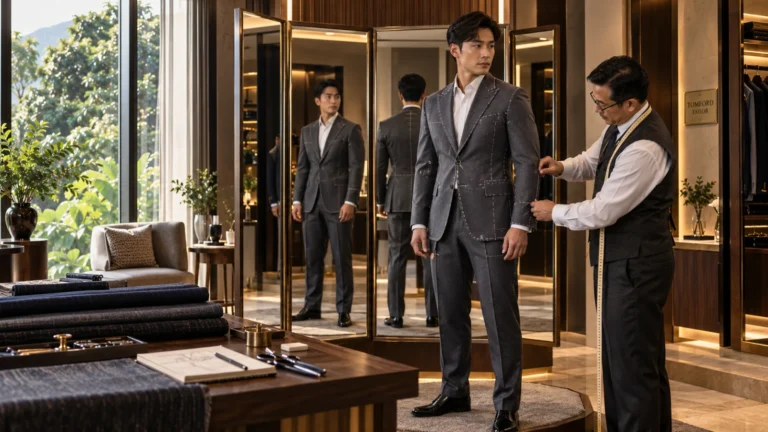
Professional measurements provide more information. The tailor can assess the chest, waist, hips, shoulders, arms and legs while also observing posture and overall proportions. The objective is not simply to collect a series of numbers but to create a useful picture of how the garment should sit on the individual wearer.
For Custom Suits in Chiang Mai, this stage is particularly important because the measurements influence the pattern and many of the decisions that follow. Accurate measurements give the tailoring process a stronger starting point and help the finished suit feel more natural when worn.
The Importance of Shoulder Measurements in Custom Suits in Chiang Mai
The shoulders form one of the most important foundations of a jacket. If the shoulder is too wide, the jacket can look loose and unstructured. If it is too narrow, the garment may create tension and restrict movement. The tailor therefore needs to understand the customer’s natural shoulder line rather than simply following a standard size.
A balanced shoulder also helps the rest of the jacket sit correctly. The chest, sleeves and jacket body all depend on this foundation. When the shoulder is properly proportioned, the suit can create a cleaner silhouette without relying on excessive padding or unnecessary structure.
Measuring the Chest and Waist for your Custom Suits in Chiang Mai
Chest and waist measurements influence both comfort and appearance. The chest needs enough room for natural movement, while the waist can be shaped to provide structure without creating an uncomfortable feeling when the wearer sits or moves.
Different customers also have different preferences. One person may want a close, defined silhouette, while another may prefer a softer fit that provides more freedom of movement. These preferences should be discussed during the consultation rather than assumed.
This is one of the advantages of Custom Suits in Chiang Mai. The measurements are not simply transferred from a generic size chart; they become part of a wider discussion about how the customer wants the garment to look and feel.
Sleeve Length Is More Important Than It Looks in your Custom Suits in Chiang Mai
Sleeve length can have a surprisingly strong effect on the appearance of a suit. A sleeve that is too long can make the jacket appear oversized, while one that is too short can disturb the proportions of the entire outfit.
The relationship between the jacket sleeve and shirt cuff is also important. A small amount of shirt cuff showing can create a polished transition between the shirt and jacket, but the exact proportion depends on personal preference and the overall design.
Because sleeve length is measured specifically for the individual, custom tailoring gives the customer greater control over this detail than standard ready-to-wear sizing normally allows.
Getting Jacket Length Right in Custom Suits in Chiang Mai
Jacket length influences the visual balance of the body. If the jacket is excessively long, the legs can appear shorter. If it is too short, the proportions may look disconnected and the garment may lose some of its traditional balance.
The appropriate length depends on the customer’s body proportions as well as the intended style. A classic business suit may call for a different proportion from a contemporary evening design. During the fitting process, the tailor can evaluate the jacket in relation to the customer’s overall frame.
Trouser Measurements Matter Too in your Custom Suits in Chiang Mai
A custom suit is not only about the jacket. The trousers need to complement the jacket in proportion, shape and length. Waist size, rise, thigh, knee, calf and hem width can all influence how the finished suit looks.
The trouser break is another detail worth considering. Some customers prefer a clean, minimal break, while others prefer a more traditional appearance with a little more fabric resting over the shoe. The choice should work with the overall silhouette rather than being treated as an isolated detail.
For Custom Suits in Chiang Mai, trouser measurements and fitting deserve the same attention as the jacket because both pieces need to work together as one complete outfit.
Choosing the Right Fabric for Custom Suits in Chiang Mai
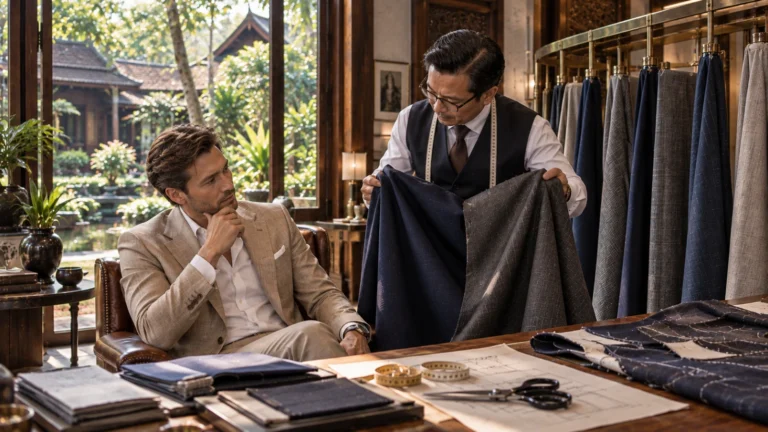
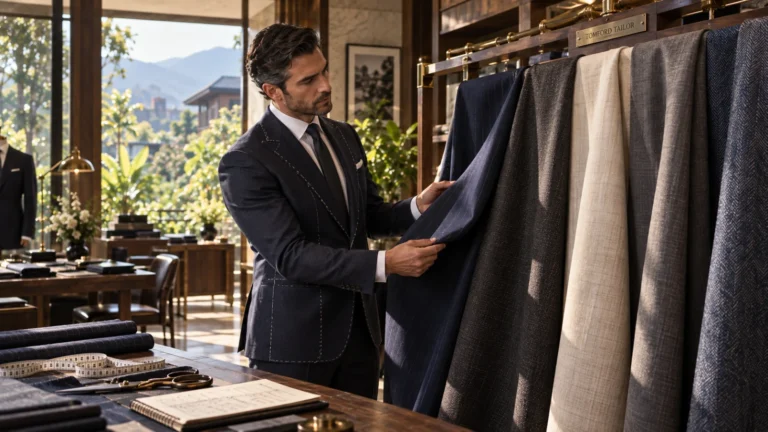
Fabric selection is one of the most enjoyable stages of the tailoring process, but it should also be approached practically. The right material depends on climate, occasion, frequency of use, comfort and personal preference.
Lightweight wool can offer versatility and a refined drape. Linen can work particularly well for relaxed warm-weather occasions, while cotton can provide a softer and more casual character. Performance fabrics can appeal to frequent travellers who want easier maintenance and better resistance to everyday wear.
Premium Italian fabrics can also provide distinctive texture, softness and drape for customers looking for a more luxurious finish. The most expensive cloth is not automatically the most suitable choice. The fabric should make sense for the person, the occasion and the way the garment will be used.
Fabric Weight and Chiang Mai’s Climate’s role in Custom Suits in Chiang Mai
Chiang Mai’s climate is an important consideration when selecting cloth. A heavy fabric that works comfortably in a cold European winter can become uncomfortable during a warm afternoon in Thailand, particularly when the customer is moving between indoor and outdoor environments.
Lightweight and breathable fabrics can therefore be attractive for visitors who expect to wear the suit in warmer conditions. However, the customer’s home climate should also be considered. Someone returning to a colder destination may want a fabric that provides greater seasonal versatility.
This is why fabric consultation should look beyond the immediate trip. The objective is to create a suit that remains useful after the customer leaves Chiang Mai.
Designing the Suit Around Its Purpose with Custom Suits in Chiang Mai
A good custom suit should have a clear purpose. A business suit may need to work across meetings, presentations and dinners. A wedding suit may need to photograph beautifully while remaining comfortable throughout a long day. An evening suit can provide greater freedom with texture, colour and finishing details.
The purpose influences the design decisions. It can determine the appropriate fabric weight, colour, construction and degree of formality. This approach prevents customers from selecting details simply because they look attractive without considering whether those details will remain useful.
Custom Suits in Chiang Mai for Business
Business clothing often benefits from versatility. Navy and charcoal remain popular because they can be combined with a wide range of shirts, ties, shoes and accessories. A well-balanced suit can move from a professional meeting to an evening dinner without requiring a complete change of clothing.
For professionals building a reliable wardrobe, Business Suits can provide a strong foundation. Custom measurements then allow the jacket and trousers to be developed around the individual rather than relying on predetermined proportions.
This can be especially useful for frequent travellers who spend long hours sitting in meetings, travelling between destinations or wearing the same garment throughout an extended working day.
Custom Suits for Weddings
Wedding clothing has different requirements from everyday business tailoring. The venue, dress code, season, time of day and overall character of the celebration can influence the final design.
An outdoor daytime wedding may suit a lighter fabric and softer colour, while a formal evening celebration may call for darker wool and a more structured silhouette. A destination wedding also creates practical considerations because the suit may need to remain comfortable through travel, photography and several hours of celebration.
For visitors preparing for a destination ceremony, Wedding Suits can be designed around the specific occasion while still allowing the garment to remain useful for future events.
Personal Style and Small Details
Custom tailoring allows customers to personalise details that are often limited in ready-made clothing. Lapel width, button style, pocket configuration, lining, trouser shape and stitching can all influence the final character of the garment.
Personalisation does not need to be dramatic. A sophisticated suit can remain relatively simple while using subtle details to reflect the wearer’s personality. A distinctive lining, carefully selected buttons or a slightly different lapel proportion can provide individuality without making the garment look overly fashionable.
The best decisions usually support the overall design rather than competing for attention.
Pattern Cutting Creates the Structure
Once measurements, fabric and design decisions have been established, the information is translated into a pattern. The pattern provides the structural foundation from which the garment will be constructed.
It determines how individual pieces relate to one another and how the jacket or trousers should sit around the customer’s body. Accuracy is important because an error at this stage can influence later construction and fitting.
Pattern cutting is therefore more than simply creating shapes from measurements. It translates the customer’s proportions and desired silhouette into a practical framework for construction.
From Pattern to Fabric
After the pattern has been prepared, the fabric can be cut according to the required pieces. The tailor needs to consider fabric grain, direction, texture and, where applicable, pattern matching.
Textured or patterned cloth can require additional attention to ensure that the visual lines remain balanced. The pieces are then prepared for construction, gradually turning the original measurements into an actual garment.
At this stage, the customer may begin to see the original concept taking shape, but the garment is not yet finished. The fitting process remains essential.
The First Construction Stage of your Custom Suits in Chiang Mai
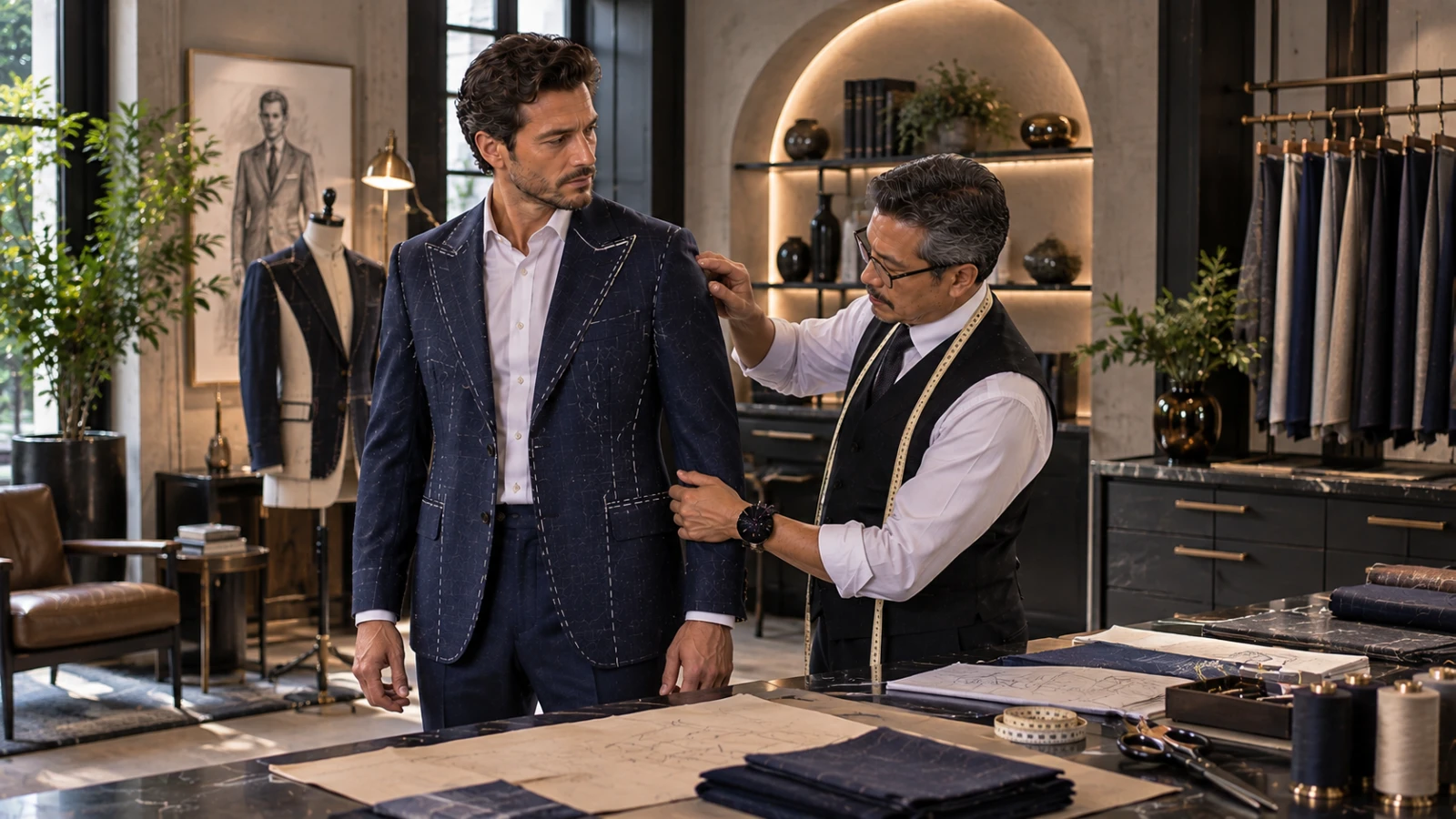
The initial construction brings the jacket and trousers together so that the developing garment can be assessed on the wearer. At this point, the suit may still require several refinements.
The shoulders, chest, waist, sleeves and overall balance can be evaluated during the first fitting. This is where the measurements are tested against the customer’s actual body rather than simply existing as numbers on a measurement sheet.
The fitting therefore acts as a practical checkpoint between construction and the finished garment.
Why the First Fitting Matters in Custom Suits in Chiang Mai
The first fitting is not simply a test of whether the jacket closes. It is an opportunity to assess the complete balance of the garment.
The tailor can examine the shoulder line, chest, waist, jacket length and sleeve position while the customer can explain how the suit feels during movement. Does the jacket feel restrictive when sitting? Is there enough room through the shoulders? Does the sleeve feel natural?
These observations provide information that cannot always be captured during the initial measurement session. For Custom Suits in Chiang Mai, the fitting stage allows the tailor to refine the garment based on how it actually behaves on the wearer.
Adjustments Are Part of the Process in getting a Custom Suits in Chiang Mai
Minor adjustments should not automatically be viewed as evidence that something has gone wrong. Refinement is a normal part of creating clothing around an individual body.
People are three-dimensional, and measurements cannot communicate every detail of posture and movement. The fitting allows the tailor to see the developing garment under real conditions and identify areas that need refinement.
Sleeve length may be adjusted, the waist may be refined, jacket balance may be changed and trouser length may be modified. Small changes can have a meaningful effect on the final appearance.
The Second Fitting and Refinement needed in Custom Suits in Chiang Mai
Depending on the garment and tailoring process, a second fitting may be used to confirm that the adjustments have produced the desired result. The customer can try the suit again and evaluate both appearance and comfort.
At this stage, the garment should begin to feel increasingly natural. The shoulder line should look balanced, the jacket should sit comfortably and the trousers should complement the jacket.
The customer should also be able to move naturally without feeling unnecessary restriction. These practical details matter because a suit is ultimately designed to be worn, not simply displayed.
Why Communication During Fittings Matters for Custom Suits in Chiang Mai
The customer should feel comfortable explaining what feels right and what does not. A tailor can assess technical aspects of the garment, but the wearer understands how it behaves during normal movement.
Clear communication makes the fitting more productive. Instead of simply saying that something feels wrong, the customer can explain whether the jacket feels tight when sitting, whether the sleeve feels too long or whether the trousers feel restrictive around the waist.
These observations give the tailor useful information for making precise adjustments.
Choosing the Right Tailor for Custom Suits in Chiang Mai
The final result depends on more than the fabric selected. Measurements, construction, communication and the fitting process all influence the finished garment.
Visitors should consider whether a tailor takes time to understand their requirements before recommending a particular design. It is also useful to ask how fittings are handled and what adjustments are included in the process.
Anyone wanting additional guidance can read Choosing a Custom Suit Tailor in Chiang Mai before beginning the process. A good tailoring relationship should feel collaborative rather than rushed.
What Makes a Suit Feel like Custom Suits in Chiang Mai ?
A suit feels genuinely personal when its individual elements work together. The proportions should suit the wearer, the fabric should match the purpose and the design should reflect the customer’s preferences.
The garment should also feel comfortable during movement. No single detail creates the entire result. It is the combination of measurements, construction, fitting and finishing that gives Custom Suits in Chiang Mai their individual character.
This is why the tailoring process should be viewed as a sequence of connected decisions rather than a simple transaction.
The Importance of Comfort u get with Custom Suits in Chiang Mai
A visually attractive suit still needs to be comfortable. Visitors may spend several hours wearing their new garment, particularly during weddings, conferences, business events and formal dinners.
Comfort can influence how naturally someone moves and how confidently they wear the clothing. Fabric weight, jacket construction, trouser proportions and the amount of room through the body can all contribute.
A well-fitted garment should provide structure without feeling restrictive. This becomes especially important for travellers who may wear the suit for long periods away from home.
Building a Versatile Suit with Custom Suits in Chiang Mai
A custom suit can be designed around multiple uses rather than one specific occasion. Navy remains one of the most adaptable choices, while charcoal can provide a more formal professional option.
Subtle textures can introduce variety without making the suit difficult to combine with other clothing. The objective is to create something that works with the customer’s existing wardrobe rather than forcing the customer to purchase an entirely new collection of accessories and shirts.
This approach can make the suit more useful and encourage more considered wardrobe planning.
Why Visitors Choose Custom Tailoring in Chiang Mai
For international visitors, the appeal comes from a combination of personalisation, craftsmanship and convenience. A traveller can use part of a Chiang Mai visit to create a garment that may remain in the wardrobe for many years.
The experience also provides greater involvement than conventional shopping. Visitors can examine fabrics, discuss design preferences, receive professional measurements and see how the garment develops through fittings.
That process makes Custom Suits in Chiang Mai more than a simple purchase. It becomes an experience connected to the customer’s own requirements and personal style.
A Custom Suits in Chiang Mai That Travels Beyond Chiang Mai
The finished garment does not remain tied to the city where it was created. A suit made in Chiang Mai can become part of a wardrobe used across different countries, climates and occasions.
A business traveller may take it to meetings in Europe. A wedding guest may wear it again at another celebration. An evening suit may become part of a long-term formal wardrobe.
The usefulness of the garment can therefore continue long after the customer has returned home.
Why Quality Construction Matters in Custom Suits in Chiang Mai
Accurate measurements are essential, but they represent only one part of the final result. Construction quality influences how the garment holds its shape, how it moves and how it performs over time.
Stitching, lining, button attachment, finishing and internal construction all contribute to the overall quality. Customers should therefore consider the complete tailoring process rather than focusing on measurements alone.
The strongest Custom Suits in Chiang Mai combine individual fitting with thoughtful construction and appropriate fabric selection.
Making the Right Choice about Custom Suits in Chiang Mai
The journey from measurements to final fit explains why custom tailoring can offer something different from ready-to-wear clothing. The process begins by understanding the customer and continues through measurement, fabric selection, pattern development, construction and fitting.
Every stage contributes to the finished result. For visitors, this can be particularly valuable because the garment is created around their actual requirements rather than a generic size.
Whether the purpose is business, a wedding or a special event, the objective remains the same: a suit that fits naturally, looks refined and remains useful beyond the trip.
Start Your Custom Suits in Chiang Mai Tailoring Journey
Creating a custom suit in Chiang Mai is a process rather than a single purchase. From the first conversation to the final fitting, each decision contributes to the finished garment and helps shape how it will look and feel when worn.
Tomford Tailor gives visitors the opportunity to explore fabrics, discuss their requirements, receive professional measurements and refine the fit through the tailoring process. When the final suit is ready, it should feel like something created specifically for the person wearing it.
Discover Custom Suits in Chiang Mai and experience the difference that individual measurements, thoughtful fabric selection and professional fitting can make.