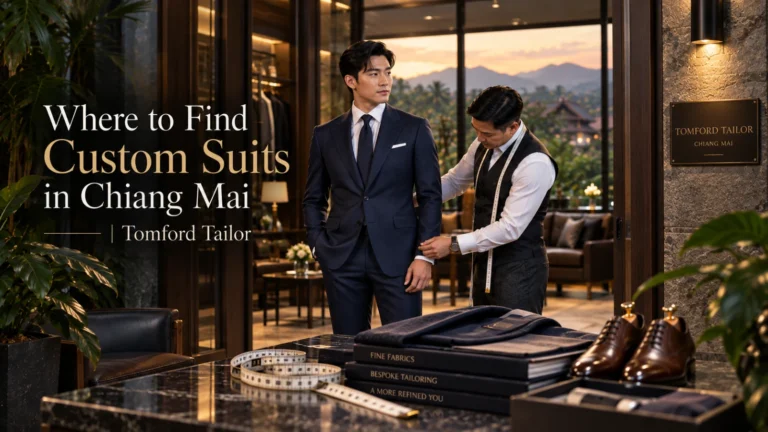
A Guide to Getting a Custom Suit in Chiang Mai
Getting a custom suit is about much more than choosing a jacket and trousers. A properly tailored suit is designed around your measurements, lifestyle, preferred fit and personal style. For anyone looking for A Guide to Getting a Custom Suit in Chiang Mai, understanding the process can make the experience easier and more rewarding for suits like business suits in Chiang Mai.
Chiang Mai has become an attractive destination for custom tailoring, particularly for customers who want personalised menswear for weddings, business, travel and special occasions. With the right tailor, you can select premium fabrics, customise the design and create a suit that feels genuinely individual.
This guide explains the key stages of getting a custom suit in Chiang Mai, from the first consultation and fabric selection to measurements, fittings and final adjustments.
Why Get a Custom Suit in Chiang Mai?
One of the main advantages of custom tailoring is personalisation. A ready-to-wear suit is produced according to standard sizes, while a custom suit is created around the proportions of the individual.
For customers following A Guide to Getting a Custom Suit in Chiang Mai, this difference is particularly important. A tailored jacket can be adjusted around the shoulders, chest and waist, while trousers can be refined according to leg length and preferred silhouette.
A custom suit can also be designed for a specific occasion. Business suits, wedding suits and travel suits can all have different requirements.
Understanding the Custom Suit Process
The custom tailoring process usually begins with a consultation.
You discuss the purpose of the suit, preferred style, colour, fabric and fit.
Measurements are then taken before the garment is constructed.
A fitting allows the tailor to evaluate the initial result and make adjustments.
The final stage focuses on finishing details and ensuring the suit meets the desired specifications.
For anyone reading A Guide to Getting a Custom Suit in Chiang Mai, understanding these stages helps set realistic expectations.
Step 1: Choose the Right Tailor
Choosing the tailor is one of the most important decisions.
Look for a professional who provides clear communication, quality fabric choices, accurate measurements and a proper fitting process.
For customers researching A Guide to Getting a Custom Suit in Chiang Mai, do not select a tailor based only on price or convenience.
The quality of the overall process matters more than a quick promise of a finished suit.
What Should You Look for in a Tailor?
A reliable tailor should be able to explain fabric options, construction, fit and design details.
They should also listen to your requirements.
A good consultation should feel like a conversation rather than a sales presentation.
For customers following A Guide to Getting a Custom Suit in Chiang Mai, this is an important sign that the tailor is focused on creating a personalised garment.
Step 2: Have a Consultation
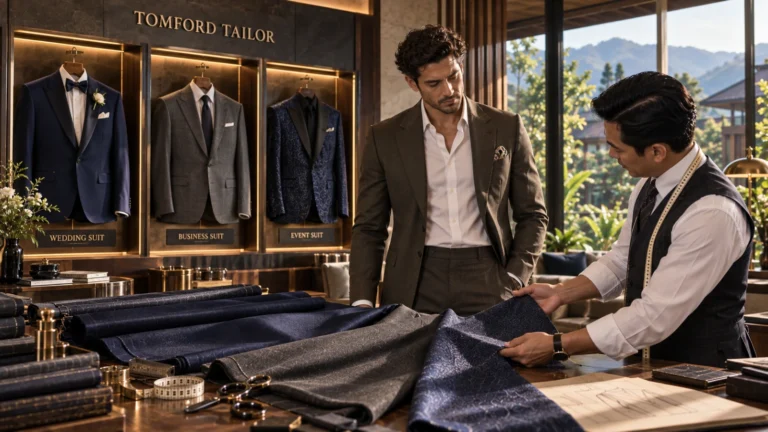
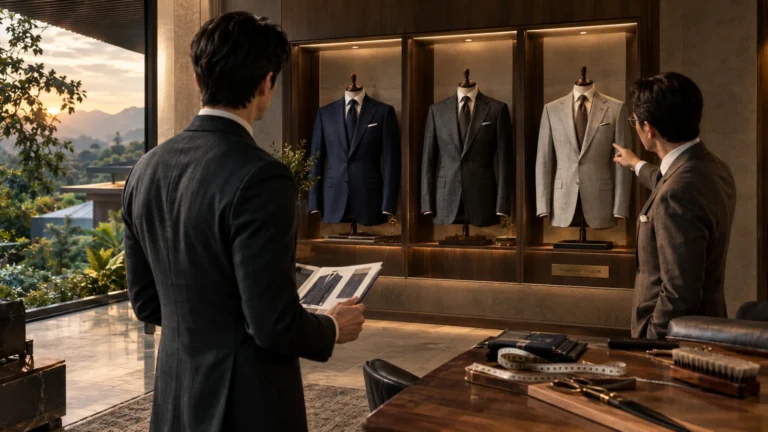
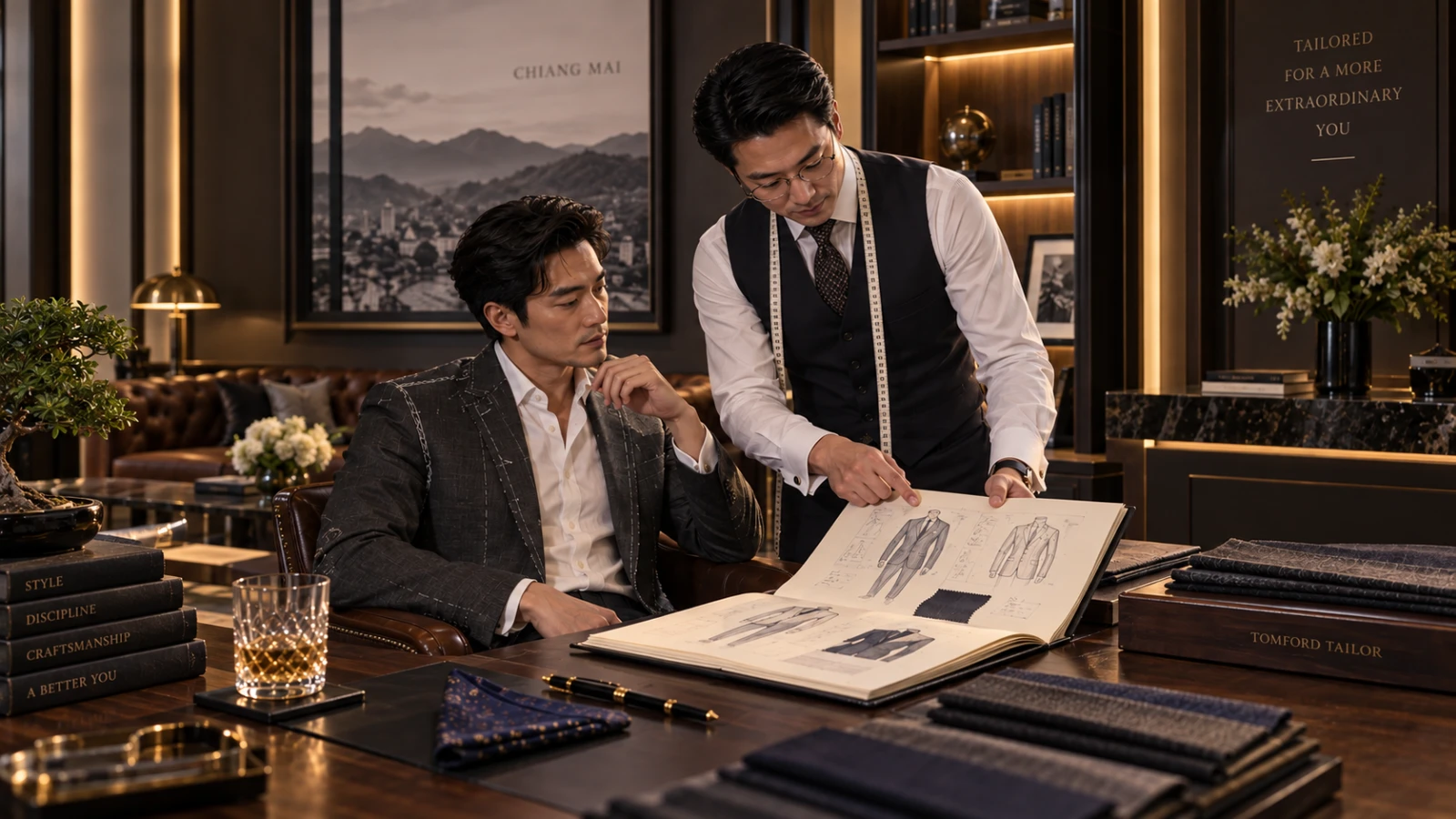
The consultation is where your ideas become a practical suit design.
Tell the tailor where you plan to wear the suit.
Mention whether it is for business, a wedding, travel, an evening event or everyday use.
Your preferred level of formality should also be discussed.
For anyone using A Guide to Getting a Custom Suit in Chiang Mai, this stage is essential because fabric and design choices depend heavily on the intended use.
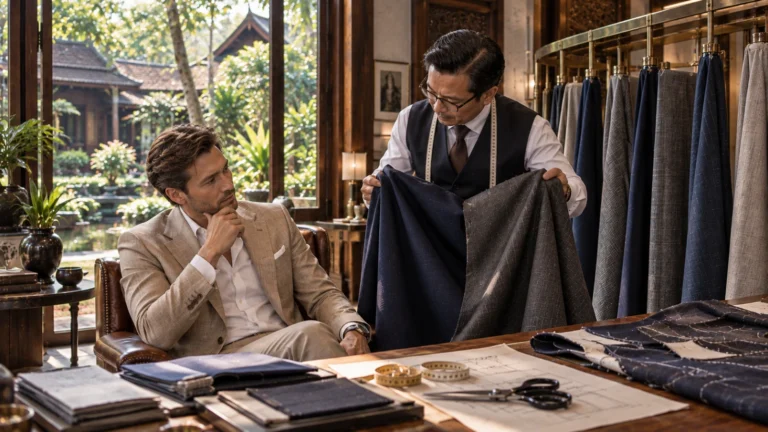
Step 3: Select Your Suit Fabric
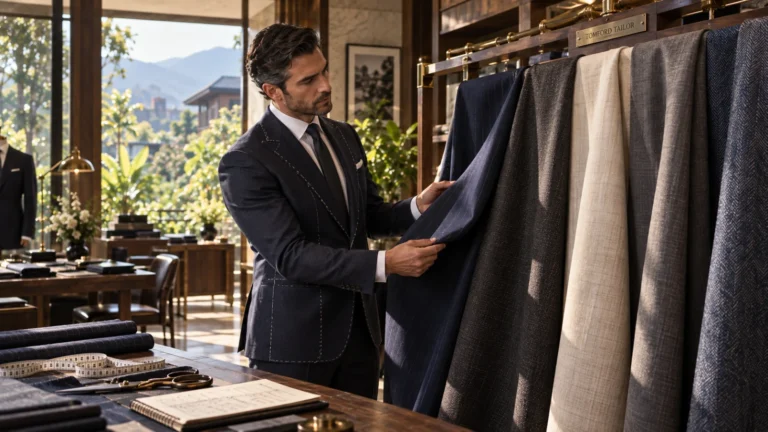
Fabric is one of the most important decisions in custom tailoring.
Wool remains a versatile option for business and formal suits.
Linen can work beautifully for warm-weather events.
Cotton provides a relaxed alternative.
Performance fabrics can be useful for travel.
Italian fabrics can provide sophisticated colour and texture.
For customers following A Guide to Getting a Custom Suit in Chiang Mai, fabric selection should balance appearance, climate, comfort and durability.
Wool for Custom Suits
Wool is one of the most versatile suit fabrics.
Lightweight wool can work well in warmer climates while maintaining a polished appearance.
Different weaves and weights create different levels of structure and drape.
For anyone researching A Guide to Getting a Custom Suit in Chiang Mai, lightweight wool is worth considering for business, weddings and formal occasions.
Linen for Custom Suits
Linen provides a naturally relaxed appearance.
It is lightweight and breathable, making it particularly attractive for warm-weather tailoring.
Natural wrinkles are part of linen’s character.
For customers reading A Guide to Getting a Custom Suit in Chiang Mai, linen can be an excellent choice for destination weddings, daytime events and resort-style dressing.
Cotton for Custom Suits
Cotton suits provide a more relaxed interpretation of tailoring.
They can work well for daytime occasions, smart-casual events and travel.
For anyone following A Guide to Getting a Custom Suit in Chiang Mai, cotton is a practical option when you want tailoring without an overly formal appearance.
Performance Fabrics
Performance fabrics can provide useful characteristics such as stretch, wrinkle resistance and easy maintenance.
These features are particularly useful for customers who travel frequently.
For customers researching A Guide to Getting a Custom Suit in Chiang Mai, performance fabrics can combine practical comfort with a professional appearance.
Italian Suit Fabrics
Italian fabrics are often associated with sophisticated colours, refined textures and elegant finishing.
They can be an excellent choice for customers who want a more luxurious custom suit.
For anyone using A Guide to Getting a Custom Suit in Chiang Mai, Italian fabric can add a distinctive character to the finished garment.
Step 4: Choose Your Suit Colour
Colour should reflect both your personal style and the occasions for which the suit will be worn.
Navy is one of the most versatile options.
Charcoal works particularly well for business and formal events.
Grey provides flexibility.
Black is ideal for certain formal evening occasions.
Lighter shades can work beautifully for warm-weather tailoring.
For customers following A Guide to Getting a Custom Suit in Chiang Mai, choose a colour that complements your existing wardrobe.
Navy Custom Suits
Navy is often the strongest choice for a first custom suit.
It works with white and blue shirts and can be paired with both black and brown footwear.
For anyone researching A Guide to Getting a Custom Suit in Chiang Mai, a navy suit provides excellent versatility.
Grey Custom Suits
Grey can create a sophisticated and professional appearance.
Charcoal is particularly suitable for formal business settings.
Lighter grey can feel more relaxed.
For customers using A Guide to Getting a Custom Suit in Chiang Mai, grey can provide an excellent second suit after navy.
Black Custom Suits
Black suits have a strong formal character.
They are suitable for specific formal events and evening occasions.
For anyone following A Guide to Getting a Custom Suit in Chiang Mai, black should generally be selected with the intended dress code in mind.
Step 5: Decide on the Fit
Fit is one of the biggest advantages of custom tailoring.
You can choose a more fitted modern silhouette or a slightly more relaxed classic shape.
The jacket should sit naturally across the shoulders.
The chest should not pull.
The waist should create a clean silhouette without excessive tightness.
For customers reading A Guide to Getting a Custom Suit in Chiang Mai, communicating your preferred fit clearly can help the tailor achieve the desired result.
Slim Fit Versus Classic Fit
Slim tailoring creates a closer silhouette.
Classic tailoring provides more room and a traditional appearance.
A modern tailored fit can provide a balance between the two.
For anyone following A Guide to Getting a Custom Suit in Chiang Mai, the best fit is ultimately the one that feels comfortable and looks proportionate.
Step 6: Select the Lapel
Lapel design can significantly influence the character of a suit.
Notch lapels are highly versatile.
Peak lapels create a stronger and more formal appearance.
Shawl lapels are commonly associated with eveningwear.
For customers using A Guide to Getting a Custom Suit in Chiang Mai, lapel choice should reflect the purpose of the suit.
Step 7: Choose Jacket Buttons
Two-button jackets are among the most versatile options.
Other configurations can create a more distinctive appearance.
Button colour and material can also influence the overall look.
For anyone researching A Guide to Getting a Custom Suit in Chiang Mai, these small details can help personalise the final design.
Step 8: Select the Jacket Pockets
Pocket design is another customisation option.
Flap pockets provide a classic appearance.
Jetted pockets look more formal.
Patch pockets can create a relaxed character.
For customers following A Guide to Getting a Custom Suit in Chiang Mai, pocket style should complement the overall level of formality.
Step 9: Choose the Suit Lining
The lining provides an opportunity for personalisation.
A traditional neutral lining creates an understated appearance.
A subtle pattern can add personality.
A distinctive lining can become a private detail that only the wearer knows about.
For anyone using A Guide to Getting a Custom Suit in Chiang Mai, lining selection is a simple way to make the suit feel more individual.
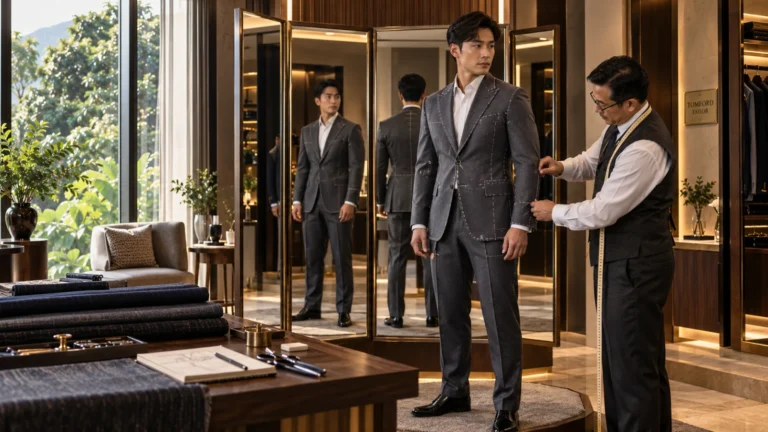
Step 10: Take Accurate Measurements
Measurements are fundamental to the custom tailoring process.
The tailor will typically measure the chest, waist, shoulders, sleeves, jacket length and trousers.
Other measurements may be considered according to the construction and desired fit.
For customers reading A Guide to Getting a Custom Suit in Chiang Mai, accurate measurements are more important than simply choosing a standard size.
Why Posture Matters
People have different postures and body proportions.
One shoulder may sit slightly differently from the other.
Some people naturally stand more upright, while others have a forward posture.
A skilled tailor can account for these characteristics.
For anyone following A Guide to Getting a Custom Suit in Chiang Mai, personalised measurements can help create a more balanced appearance.
Step 11: Choose Your Trouser Style
Trousers should complement the jacket.
The waist should remain comfortable.
The rise should suit your body and preferred style.
The leg should provide a clean silhouette.
For customers researching A Guide to Getting a Custom Suit in Chiang Mai, trouser details should not be overlooked.
Trouser Break
The trouser break describes how the fabric meets the shoe.
A no-break style creates a modern appearance.
A slight break provides a versatile traditional look.
A fuller break creates a more classic silhouette.
For anyone using A Guide to Getting a Custom Suit in Chiang Mai, trouser break can be adjusted according to personal preference.
Step 12: Customise the Shirt
Many customers choose a custom shirt to accompany their suit.
The collar, cuffs, fabric and fit can all be personalised.
For customers following A Guide to Getting a Custom Suit in Chiang Mai, coordinating the shirt with the suit can create a more complete appearance.
Choosing a Shirt Collar
A spread collar is versatile for business and formal dressing.
A cutaway collar creates a more contemporary look.
A button-down collar provides a more relaxed appearance.
For anyone researching A Guide to Getting a Custom Suit in Chiang Mai, collar selection should complement the suit and tie.
Step 13: Consider Suit Accessories
Accessories complete the tailored outfit.
Ties, pocket squares, cufflinks, belts, watches and dress shoes can all influence the final appearance.
For customers using A Guide to Getting a Custom Suit in Chiang Mai, accessories should be selected according to the suit colour and occasion.
The objective is coordination rather than excessive matching.
Wedding Suit Accessories
Wedding outfits can support more personality.
A refined tie, elegant pocket square and polished shoes can complement a groom’s suit.
For anyone following A Guide to Getting a Custom Suit in Chiang Mai, wedding accessories should work with the overall ceremony style.
Business Suit Accessories
Business accessories should generally remain understated.
A silk tie, white pocket square, leather belt and polished shoes create a reliable combination.
For customers researching A Guide to Getting a Custom Suit in Chiang Mai, classic accessories provide excellent versatility.
Step 14: Attend the First Fitting
The first fitting is where the suit begins to take shape.
The tailor examines how the jacket and trousers sit on the body.
Adjustments may be identified around the shoulders, sleeves, chest, waist and trousers.
For customers following A Guide to Getting a Custom Suit in Chiang Mai, the first fitting is an important stage that should not be rushed.
What Happens During a Fitting?
The tailor evaluates balance, comfort and proportions.
The jacket should sit correctly across the shoulders.
Sleeve length should complement the shirt cuff.
Trousers should fall naturally.
For anyone using A Guide to Getting a Custom Suit in Chiang Mai, communicate clearly if anything feels uncomfortable.
Step 15: Make Adjustments
Small adjustments can make a major difference.
A sleeve can be shortened.
The waist can be refined.
The trouser length can be adjusted.
The jacket balance can be improved.
For customers researching A Guide to Getting a Custom Suit in Chiang Mai, this refinement stage is one of the main benefits of choosing custom tailoring.
Step 16: Final Fitting
The final fitting checks the completed suit.
The overall silhouette, comfort and details are reviewed.
For anyone following A Guide to Getting a Custom Suit in Chiang Mai, this is the opportunity to ensure that the finished garment meets the original expectations.
How Many Fittings Are Needed?
The number of fittings depends on the tailor, construction method, garment and required adjustments.
Some garments may require more refinement than others.
For customers using A Guide to Getting a Custom Suit in Chiang Mai, it is sensible to ask about the fitting process before placing an order.
How Long Does Custom Tailoring Take?
The timeline varies according to fabric availability, construction, design complexity and fittings.
Customers should discuss the expected completion date during the consultation.
For anyone researching A Guide to Getting a Custom Suit in Chiang Mai, planning ahead is especially important when preparing for a wedding or international trip.
Ordering a Custom Suit Before a Wedding
Wedding suits should ideally be planned well in advance.
This allows time for fabric selection, measurements, construction and fitting.
For customers following A Guide to Getting a Custom Suit in Chiang Mai, starting early provides greater flexibility if adjustments are needed.
Custom Suits for International Visitors
Chiang Mai attracts visitors from many countries.
A custom suit can be created during a stay when the tailoring schedule is planned appropriately.
For anyone using A Guide to Getting a Custom Suit in Chiang Mai, communicate your departure date during the first consultation.
This allows the tailor to understand your available timeframe.
Custom Suits for Business Travellers
Business travellers often need efficient tailoring without compromising quality.
A professional consultation can focus on versatile fabrics, practical styling and a schedule that works around travel.
For customers researching A Guide to Getting a Custom Suit in Chiang Mai, mention upcoming business trips so fabric and construction can be selected appropriately.
Custom Suits for Hot Weather
Chiang Mai’s climate makes fabric selection particularly important.
Lightweight wool, linen, cotton and suitable performance fabrics can provide greater comfort.
For anyone following A Guide to Getting a Custom Suit in Chiang Mai, choosing a climate-appropriate fabric can make the finished suit considerably easier to wear.
Custom Suits for Formal Events
Formal suits require careful attention to fabric, colour and accessories.
Dark navy, charcoal and black are reliable choices.
For customers using A Guide to Getting a Custom Suit in Chiang Mai, discuss the dress code before finalising the design.
Custom Suits for Casual Events
Custom tailoring does not have to mean formal tailoring.
Cotton, linen and lightweight wool can create relaxed suits.
Soft construction, patch pockets and loafers can further reduce formality.
For anyone researching A Guide to Getting a Custom Suit in Chiang Mai, casual tailoring provides greater wardrobe flexibility.
How Much Does a Custom Suit Cost in Chiang Mai?
The cost of a custom suit depends on the fabric, construction, design details and tailoring requirements.
Premium fabrics generally increase the overall investment.
For customers following A Guide to Getting a Custom Suit in Chiang Mai, compare the quality of materials and service rather than focusing only on the lowest price.
Cheap Custom Suits Versus Quality Tailoring
A low price does not necessarily represent better value.
A quality custom suit should provide appropriate fabric, accurate measurements, proper fitting and careful construction.
For anyone using A Guide to Getting a Custom Suit in Chiang Mai, consider the complete experience when comparing tailors.
Questions to Ask Your Tailor
Before ordering, consider asking:
- What fabric options are available?
- How are measurements taken?
- How many fittings are included?
- Can the suit be adjusted after the first fitting?
- What construction options are available?
- How long will the suit take?
- Can the schedule accommodate my travel plans?
For customers following A Guide to Getting a Custom Suit in Chiang Mai, these questions can help you make a more informed decision.
Common Custom Suit Mistakes to Avoid
One common mistake is choosing fabric based only on appearance.
Another is selecting a fit that is too tight.
Some customers also underestimate the importance of trouser fit and accessories.
For anyone researching A Guide to Getting a Custom Suit in Chiang Mai, the best approach is to consider the complete outfit rather than individual details in isolation.
Do Not Ignore Comfort
A suit should look good and feel comfortable.
If the shoulders restrict movement or the trousers feel too tight, the garment will not be enjoyable to wear.
For customers using A Guide to Getting a Custom Suit in Chiang Mai, comfort should be part of the fitting conversation from the beginning.
Do Not Follow Trends Blindly
Fashion trends change quickly.
A well-proportioned suit can remain stylish for many years.
For anyone following A Guide to Getting a Custom Suit in Chiang Mai, timeless design often provides better long-term value than extreme seasonal trends.
Build a Versatile Suit Wardrobe
A single custom suit can be an excellent starting point.
Navy provides versatility.
Charcoal adds formal sophistication.
Grey creates another professional option.
Linen or cotton can provide a more relaxed alternative.
For customers researching A Guide to Getting a Custom Suit in Chiang Mai, building gradually allows every suit to serve a different purpose.
Why Choose Tomford Tailor?
For customers looking for A Guide to Getting a Custom Suit in Chiang Mai, Tomford Tailor offers a personalised approach to custom menswear.
The process focuses on understanding the customer’s requirements before selecting fabric and design details.
Measurements are taken with attention to individual proportions, while fittings allow the garment to be refined before completion.
Whether you need a wedding suit, business suit, travel suit or sophisticated everyday garment, the objective is to create tailoring that feels personal and comfortable.
Premium fabric selection also allows customers to choose materials suited to Chiang Mai’s climate and their own lifestyle.
The Tomford Tailor Custom Suit Experience
A successful custom suit begins with a clear understanding of what the customer actually needs.
The consultation establishes the purpose of the suit.
Fabric selection determines much of its comfort and character.
Measurements create the foundation for the fit.
Fittings allow refinement.
Accessories complete the final appearance.
For anyone following A Guide to Getting a Custom Suit in Chiang Mai, this complete approach is what transforms custom tailoring into a genuinely personalised experience.
Your Custom Suit Journey in Chiang Mai
Getting a custom suit should be an enjoyable process.
Take time to consider how you will wear the suit, what colours suit your wardrobe and which fabrics fit your lifestyle.
Choose a tailor that communicates clearly and takes fitting seriously.
For customers searching A Guide to Getting a Custom Suit in Chiang Mai, the best results come from combining thoughtful choices with professional tailoring.
Whether you are visiting Chiang Mai for a wedding, business trip or holiday, a custom suit can become one of the most useful and personal additions to your wardrobe.
Final Thoughts
Knowing A Guide to Getting a Custom Suit in Chiang Mai can make the tailoring experience considerably easier.
Start with the right tailor.
Discuss your requirements.
Select an appropriate fabric.
Choose the colour, fit and design details carefully.
Have accurate measurements taken.
Attend the fittings.
Allow the tailor to make the necessary refinements.
At Tomford Tailor, the focus is on creating personalised suits that combine refined fabrics, comfortable fit and sophisticated styling.
If you are ready to create a suit designed specifically around you, discover the custom tailoring experience at Tomford Tailor in Chiang Mai.
Start your custom suit journey in Chiang Mai with expert guidance, premium fabrics and personalised tailoring at Tomford Tailor.